My Nerves Were Touched!
By Tekalign Nega Angore (PhD)1
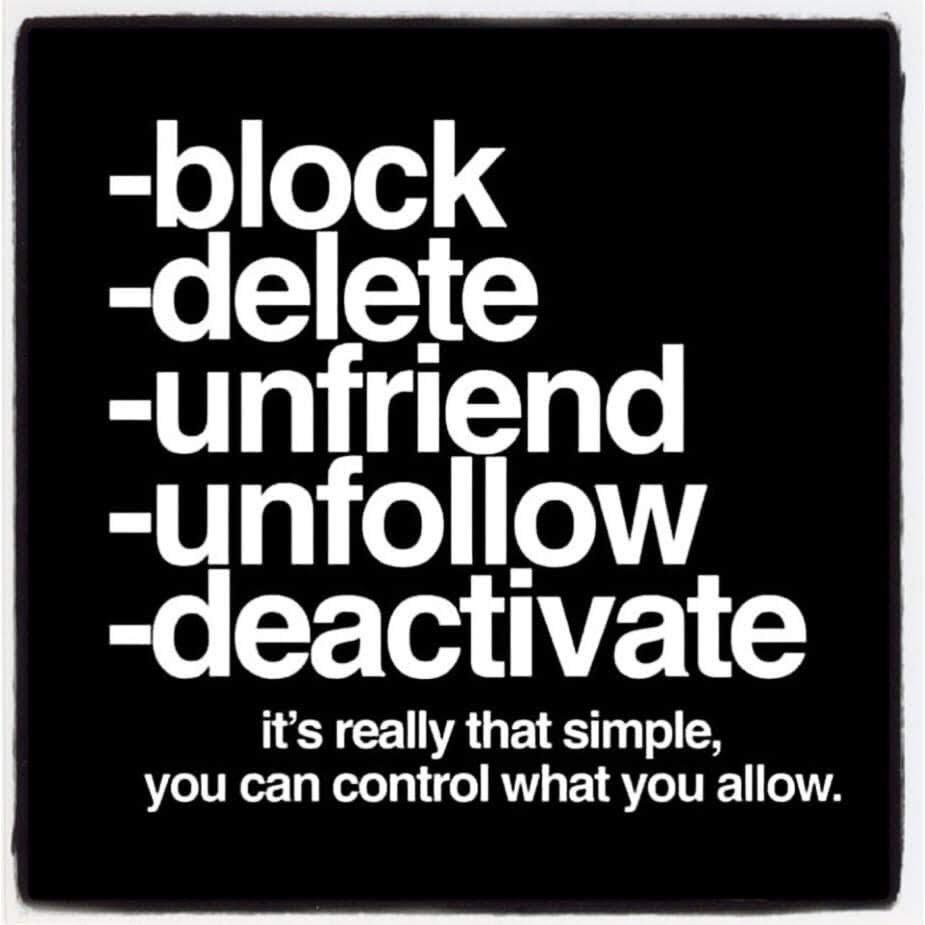
Certain things always fascinate me; in particular, the contrary meanings we assign to the same event never cease to amaze. Let me use a practical example from the world of social media to illustrate this. We frequently hear phrases like “I blocked him” or “He blocked me.” Although blocking and being blocked are different actions, the way we interpret the event is strikingly similar.
The one who blocks describes the act with pride, as if to say, “I evicted them.” These days, even the threat—“I’ll dismiss you with a block”—is being used as a display of victory. The message is clear: “I am no longer available to you; you won’t find me even if you look; from now on, my affairs are none of your business.” On the other hand, the one who is blocked presents this same event as a badge of honor for their own dignity. They view the block as evidence of the other person’s “incapacity” and “lack of patience.” When the blocker is criticized elsewhere, the blocked person joins in the “stoning,” contributing an “it happened to me too” without hearing the story from the horse’s mouth. Unfortunately, on both sides, there is no regret, no turning back, and no attempt to see oneself through the other’s lens. The thing that wounded our emotions and psyche passes by without growing either of us, sowing only discord between us.
Of course, the “block” option on social media exists for a reason. Sometimes, blocking is indeed necessary. It is a solution designed to protect people from inappropriate psychological and verbal abuse. It is a reality that the digital village is full of those who consider insulting, threatening, and belittling others as a form of fame. The primary desire behind blocking is to find “relief” (effoita); it is an action we take when we conclude that the other person’s voice and presence have disturbed our peace or that the relationship is no longer enriching us. Since we have full control over our pages, we dismiss whom we don’t want at our discretion.
But the real question lies here: What about the face-to-face social world of our daily lives? We cannot always run away from it. What if the person who touches our nerves is someone we cannot escape or evict—someone close to us? In a situation where staying together is a must, what do we do if the other person has an approach that tests our patience and pushes our identity in a direction we don’t like?
Often, when our weaknesses overshadow our strengths, it becomes easier to blame the source of the problem on the other person. On the day we respond to an insult with another insult, we don’t feel we were in the wrong. We forget that it is our responsibility to build an identity that makes not retaliating a choice. Our emotional and psychological triggers make us forget that when our Lord “was led to be insulted, he did not insult in return; when he suffered, he did not threaten; but he entrusted himself to the one who judges justly” (1 Peter 2:23), it was for our instruction.
When we forget that the primary cause for the emergence of the “identity we don’t like” is our own weakness, we take our eyes off ourselves and focus only on the provocateur. However, the relief we get from blaming others for our unwanted behavior is short-lived. Once the instant provocation passes and silence settles in, regret takes over. We agonize: “Why did I react like that? Was the scale of my anger appropriate?” When we look into our hearts, the matter we were angry about might even seem laughable; however, the mess created by the storm of our anger is not easily fixed. This shows that we are viewing the current event not just through a timely lens, but through an unresolved “memory-tuning” from our past.
Regret alone is no guarantee against falling again tomorrow. When we repeatedly manifest anger over similar issues, people’s trust in us diminishes, and an atmosphere of fear begins to prevail around us. We become identified by the things that easily upset us, with people saying, “Don’t even bring that subject up with him.” A weakness that is deemed “off-limits” for discussion is not a direction in which we can grow. So, what should we do so that our weaknesses, which we have repeatedly blamed on others, become opportunities for improvement? The solution is to examine the deep-seated reasons that touch our nerves and confront the reality. The purpose of this self-examination is to help us mature in our emotions and responses. An immature person is a prisoner of yesterday, viewing events only through a spirit of defense and attack. To this end, three key self-reflection points are worth noting:
First, let us examine what preceded our “explosion.” When we pay attention, it is not hard to understand that things that seem sudden are not actually sudden. They felt sudden only because our thoughts were occupied with other matters, not because there were no warning signs. If we view our life’s journey as a field where “mines” are buried with warning signs, identifying the signs helps us avoid stepping on them and exploding.
Second, let us ask: what kind of memory did the event bring to life within us? Perhaps not being told “thank you” made us angry not just because of the current event, but because of a long-standing heartbreak from not receiving recognition for previous work. In other words, our sudden reaction might be pointing to a reason that has lived with us but remained un-confronted. If we don’t bring closure to that reason, we may be repeatedly provoked in unwanted directions by the same type of event. But if we use the event to understand ourselves, we can set boundaries to prevent similar things from leading us where we don’t want to go.
Third, let us listen to the physical signs our body gives us. Before getting angry, signs like neck tension, a flushing face, or a stomach cramp appear. Noticing these creates an awareness that “I am heating up.” If we become aware of our thoughts early, we can also become aware of our response. If our thoughts fail to tame our emotions, let’s not stop at just trying to halt one thought with another; rather, let’s use our bodies—for example, by taking a deep breath—to calm ourselves.
In general, just as it is easy to dismiss someone with a “block” on social media, we must learn to handle the people and reasons that touch our nerves in real life with investigation and maturity. The solution is not to escape the problem via a block, but to move beyond external blame and the imprisonment of past memories to become our own vigilant guardians. By staying alert to physical warnings and taming our emotions with steady breaths, we can transform our relationships from a spirit of attack to a spirit of learning. When this happens, by turning regret into maturity and explosions into stability, we become people of better character who stand in our social interactions not with the pride of a “block,” but with our true identity.
[1] Given that the article was originally written in Amharic and then translated into English using AI, it’s important to be mindful of potential nuances that might have been lost in translation.
Written by : Dr. Tekalign Nega

Dr. Tekalign is the co-director of the Neighbor Love Movement that promotes love, justice, and flourishing across boundaries. He is a public intellectual passionate about human flourishing at the individual, institutional, and communal levels. His commentary on contemporary issues has been featured in numerous international and local media outlets, including The Economist, The Guardian, Fana TV, Walta TV, and Amhara TV.
Dr. Tekalign is a sought-after speaker and serves as an Assistant Professor at Addis Ababa University and a lecturer at the Ethiopian Graduate School of Theology. He is married to Tehitena Mesfin, has one son and one daughter. He is the author of My Neighbor(Rohobot, 2020) and The Prosperity Gospel: Turning a House of Prayer into a House of Merchandise (Rohobot, 2017). He has also written numerous articles addressing various issues.